Processing
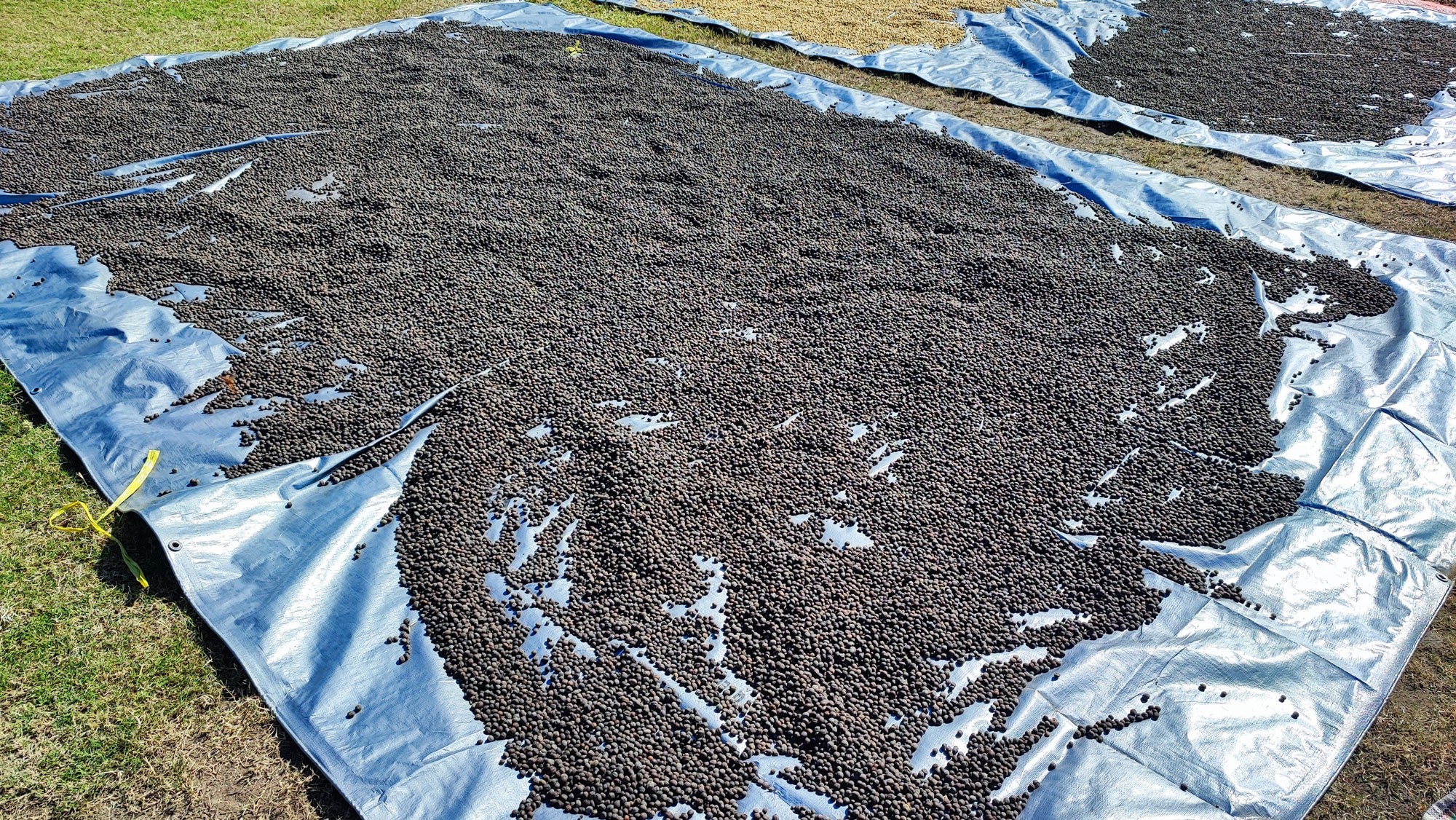
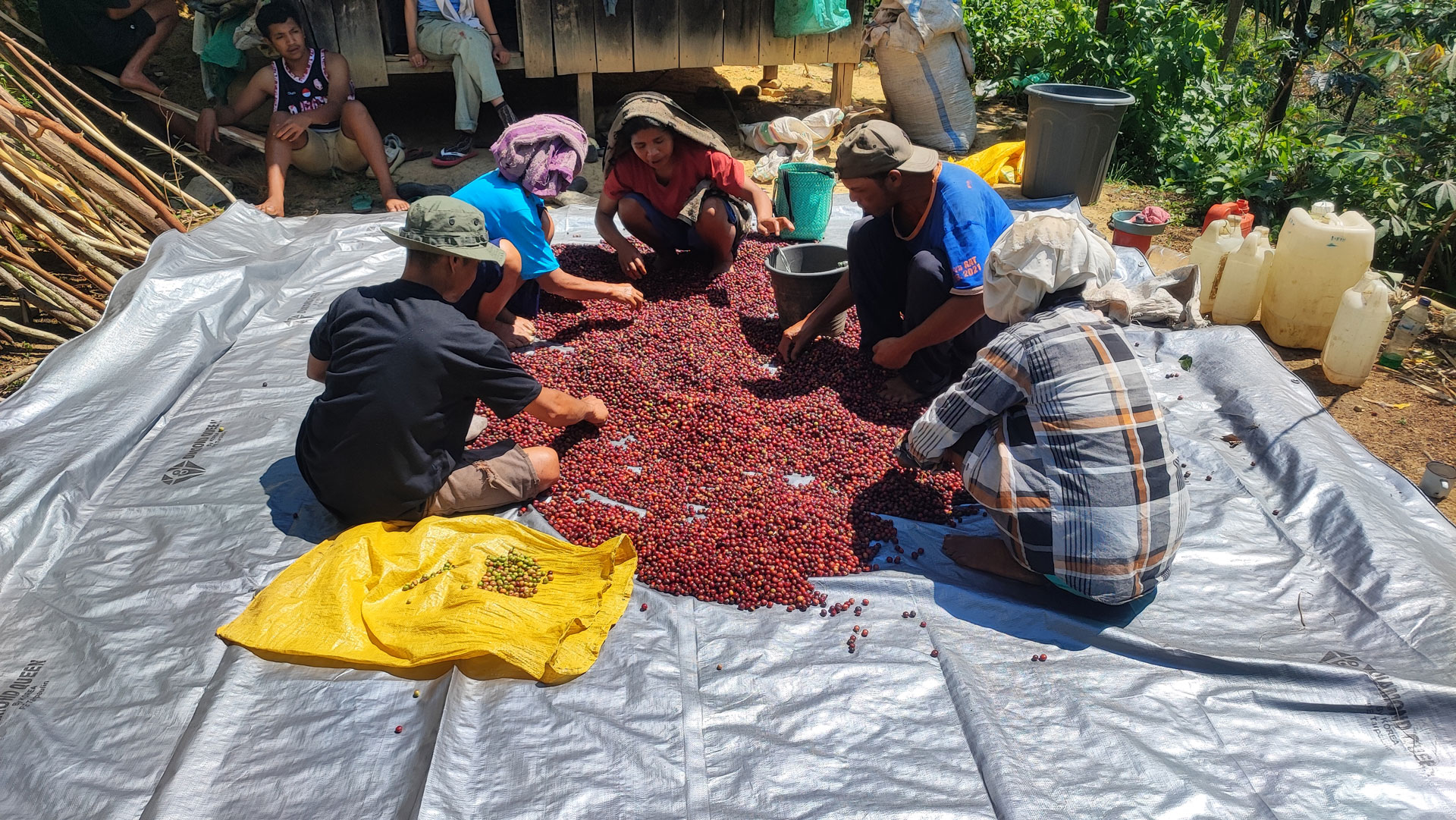
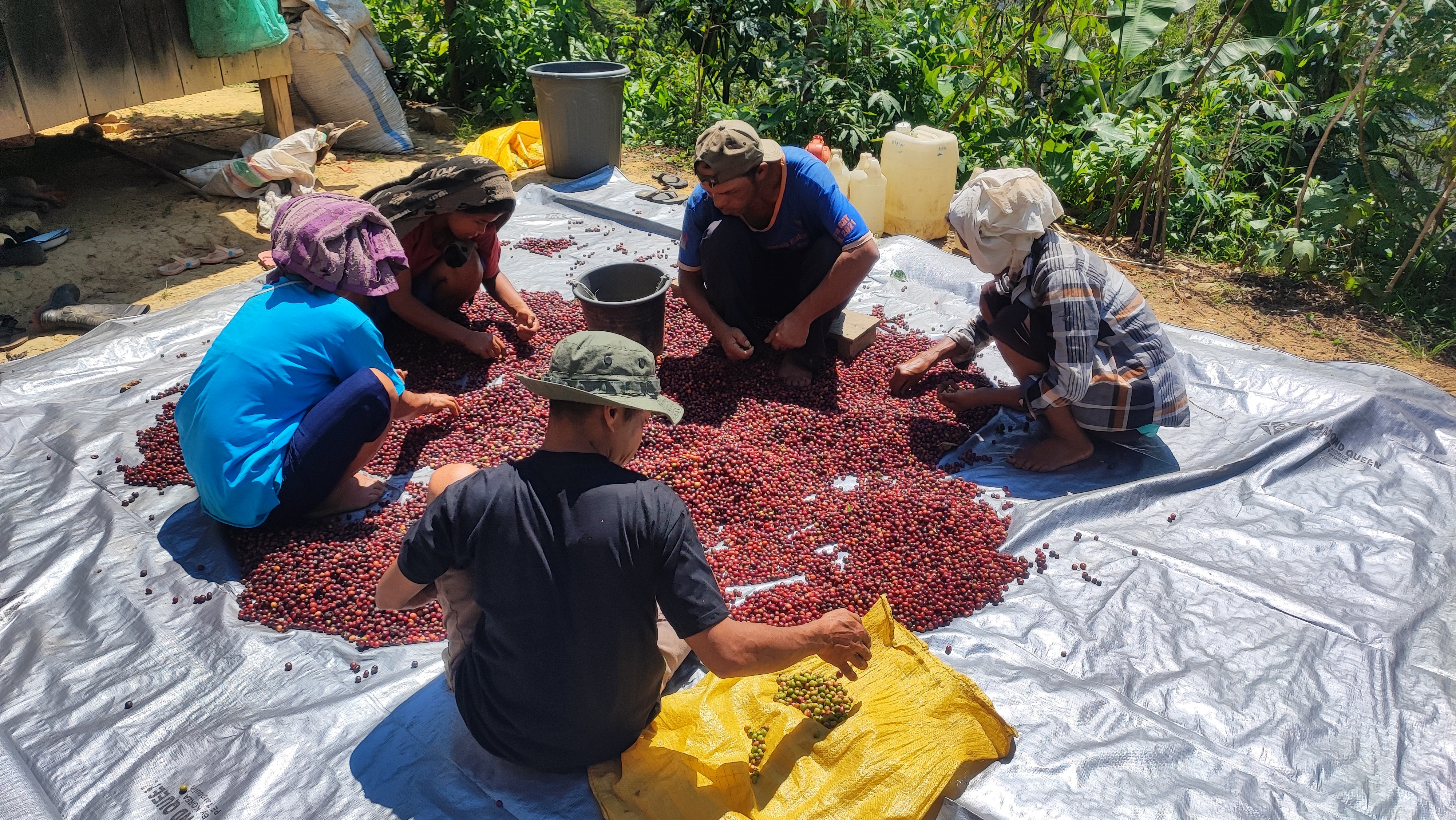
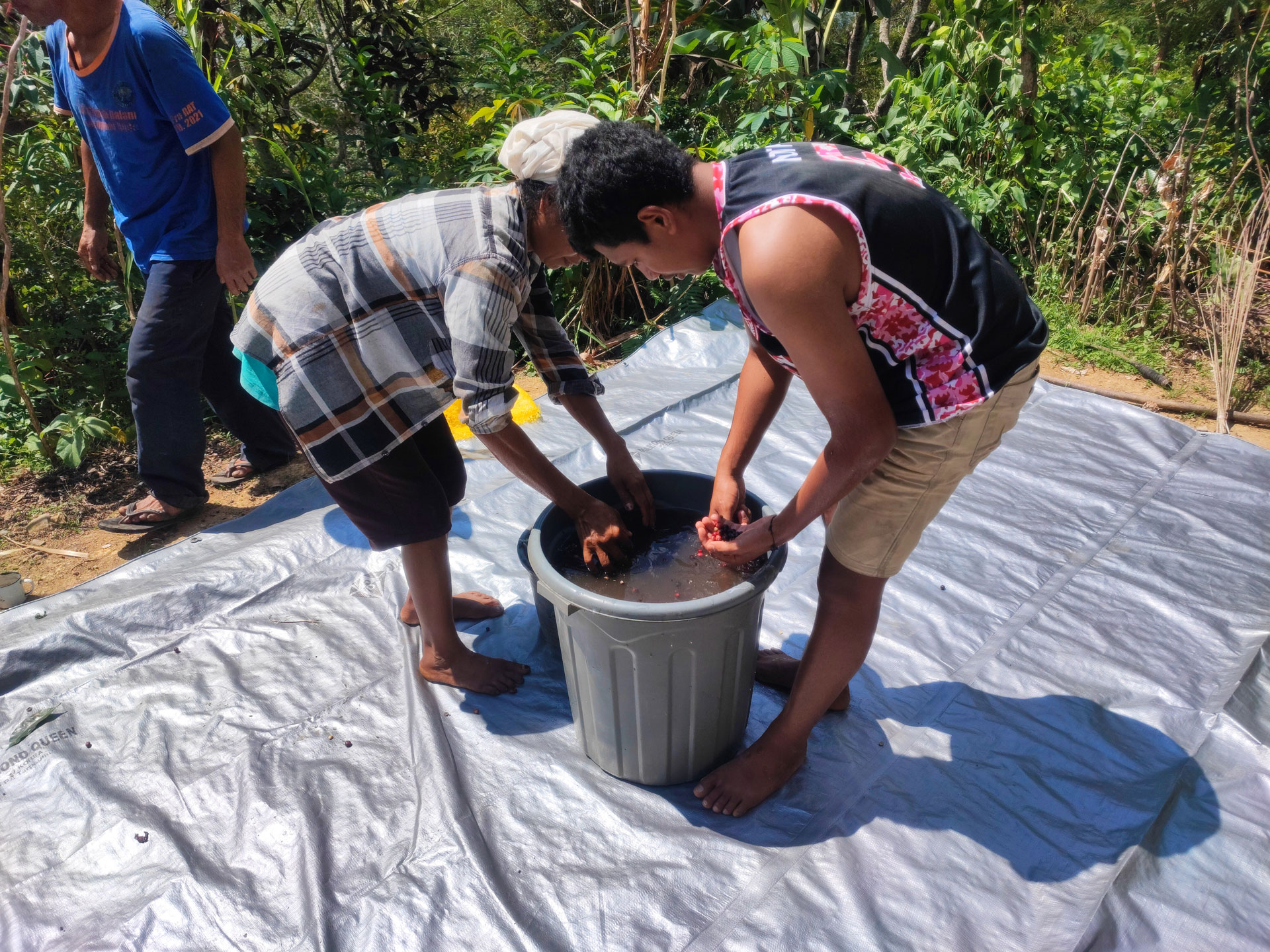
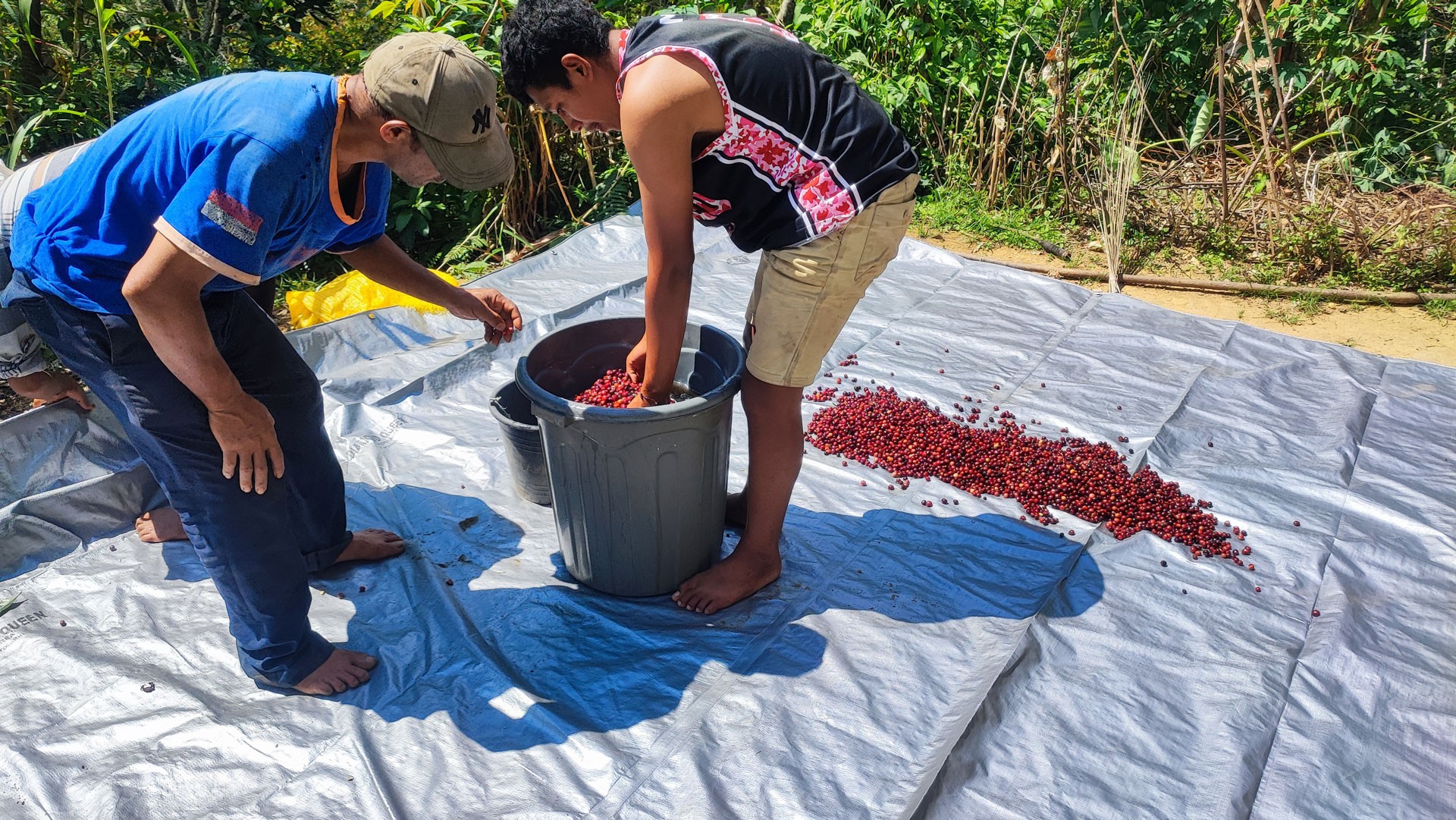
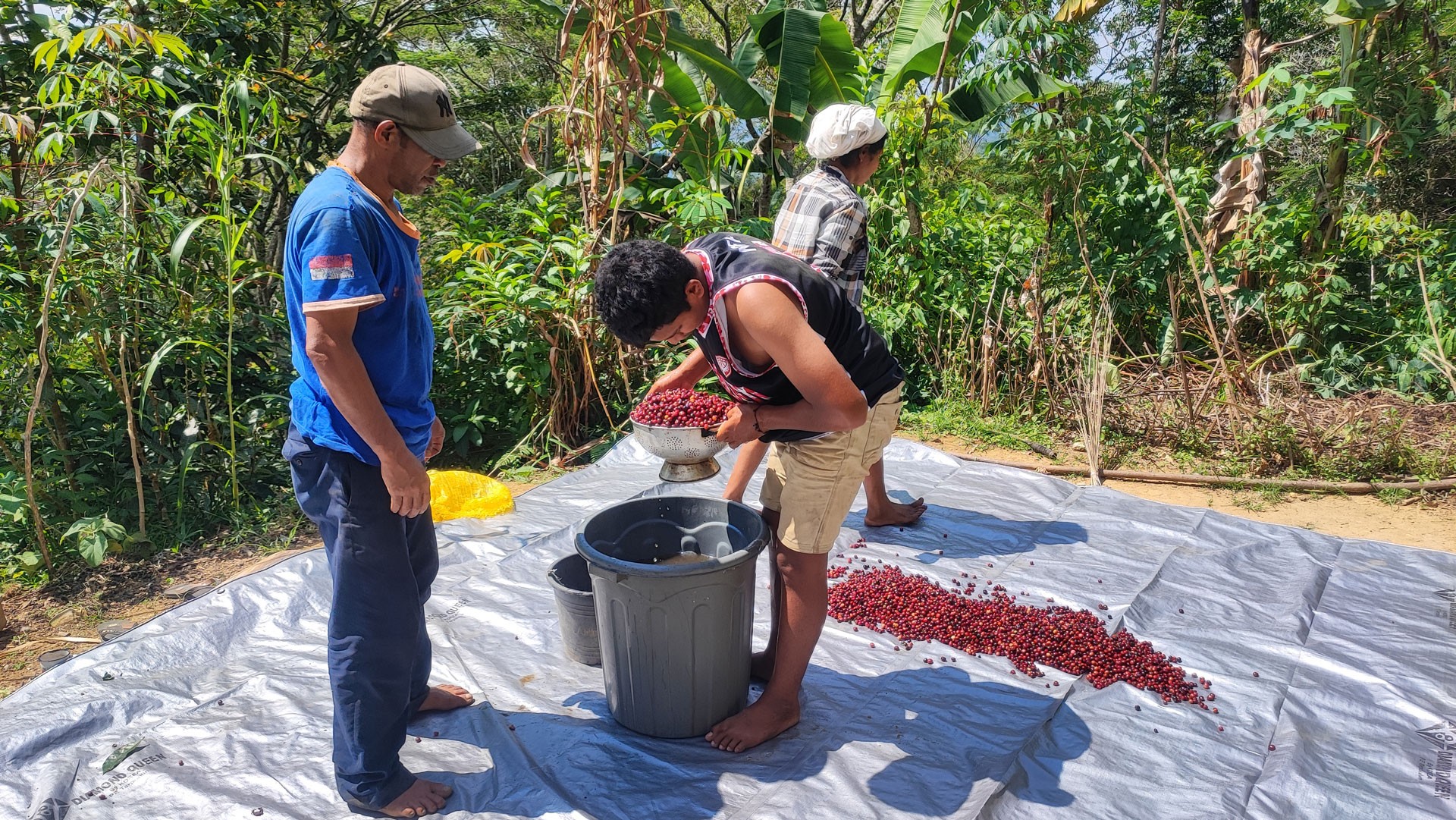
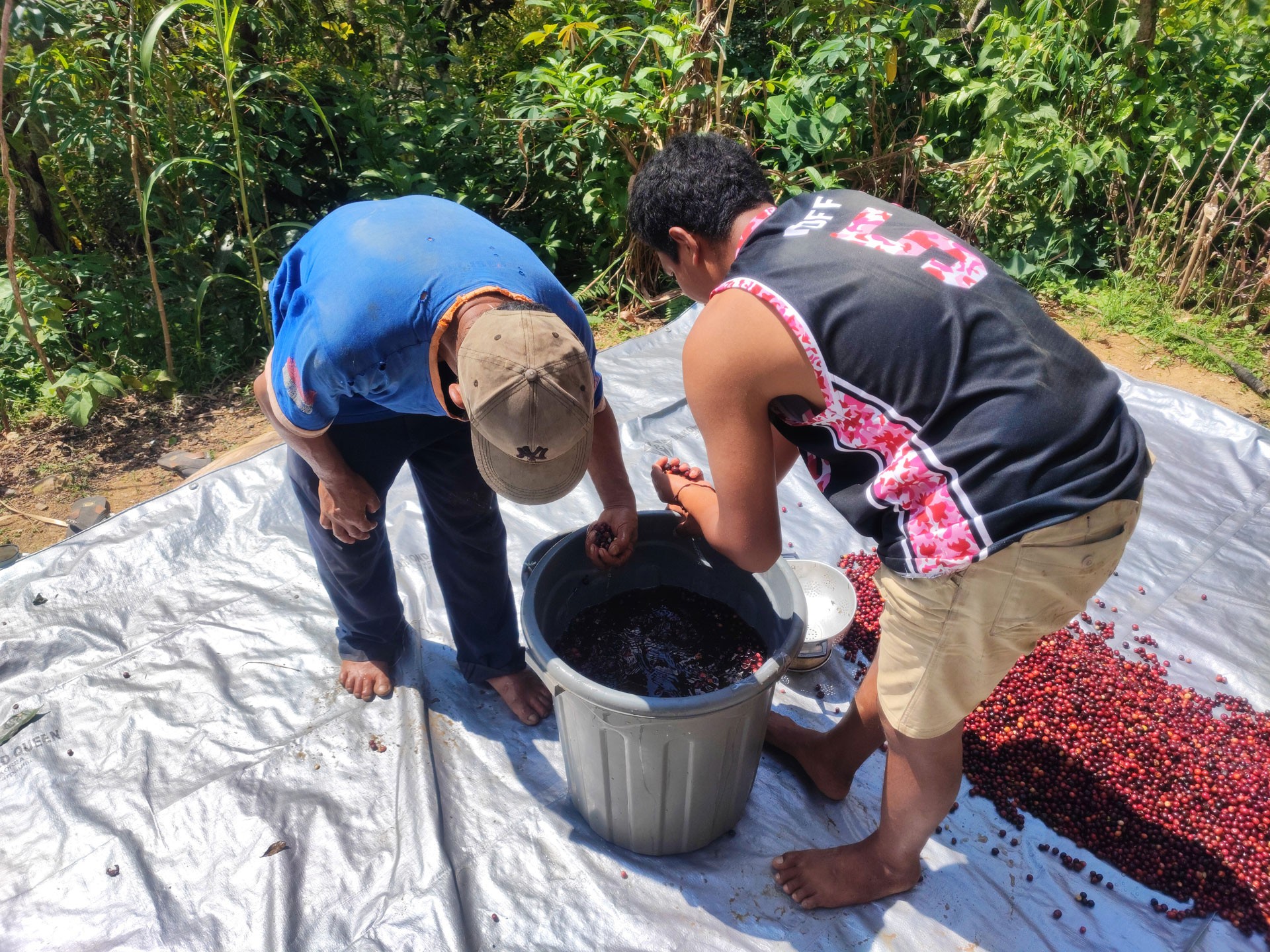
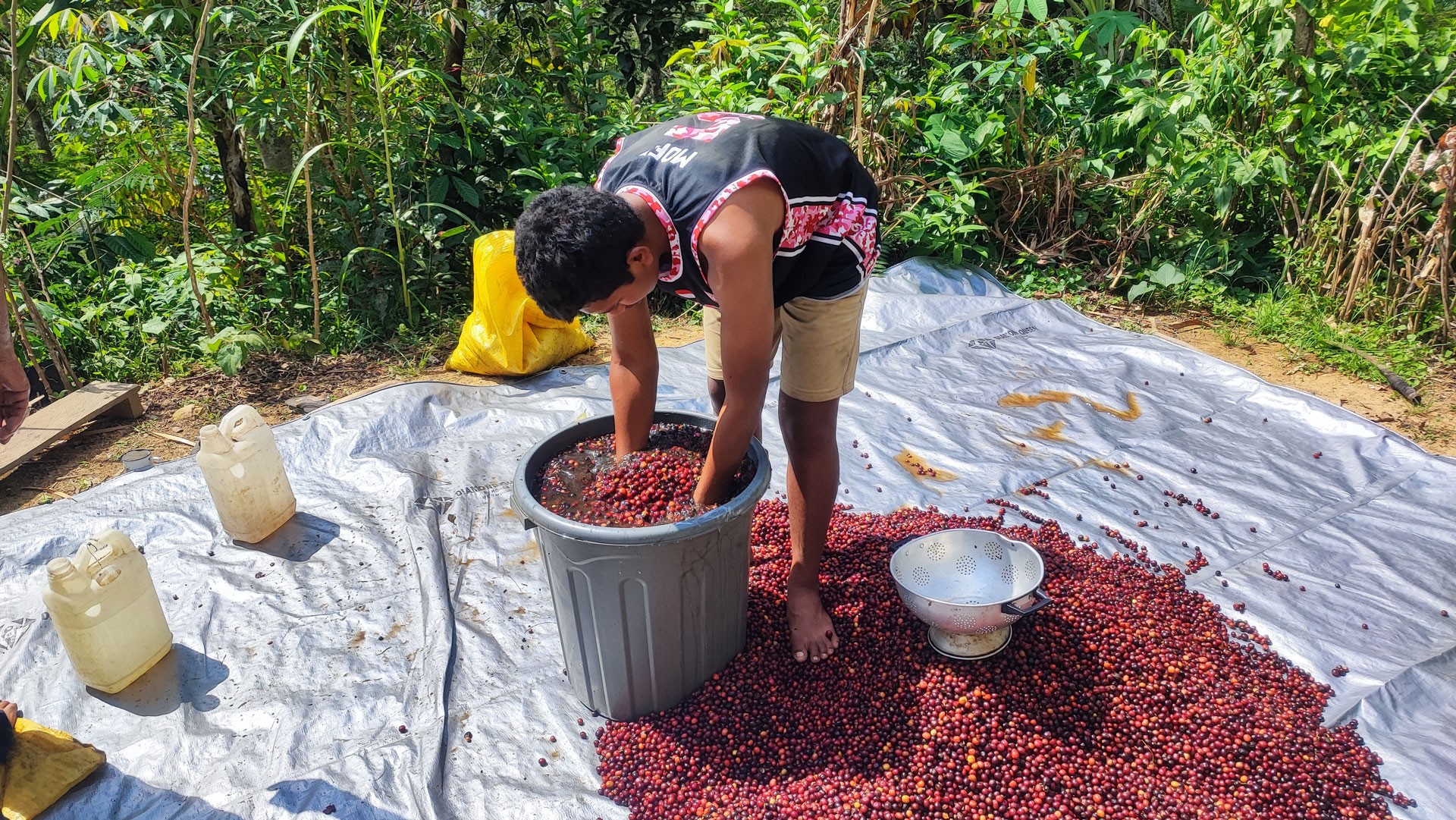
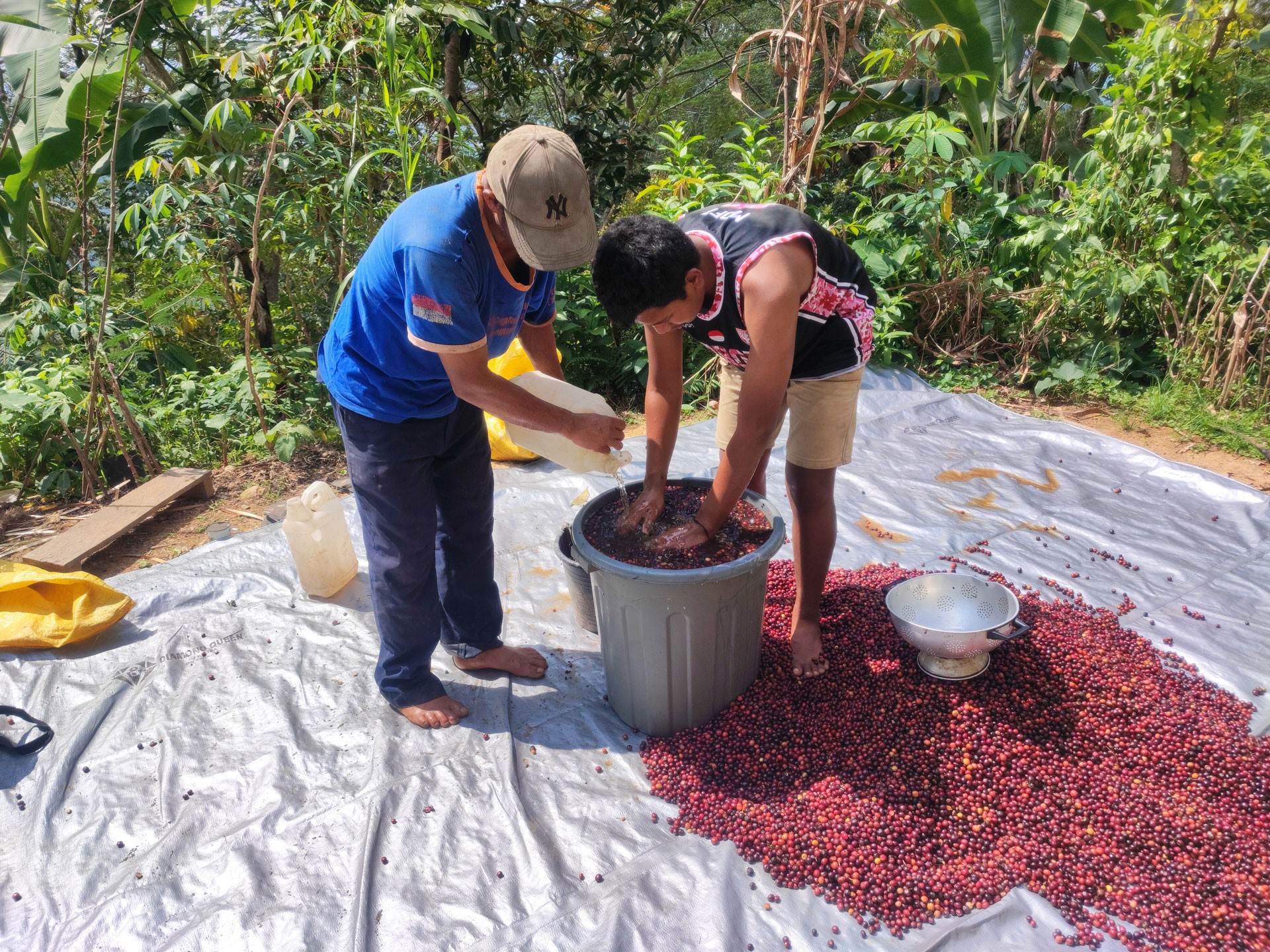
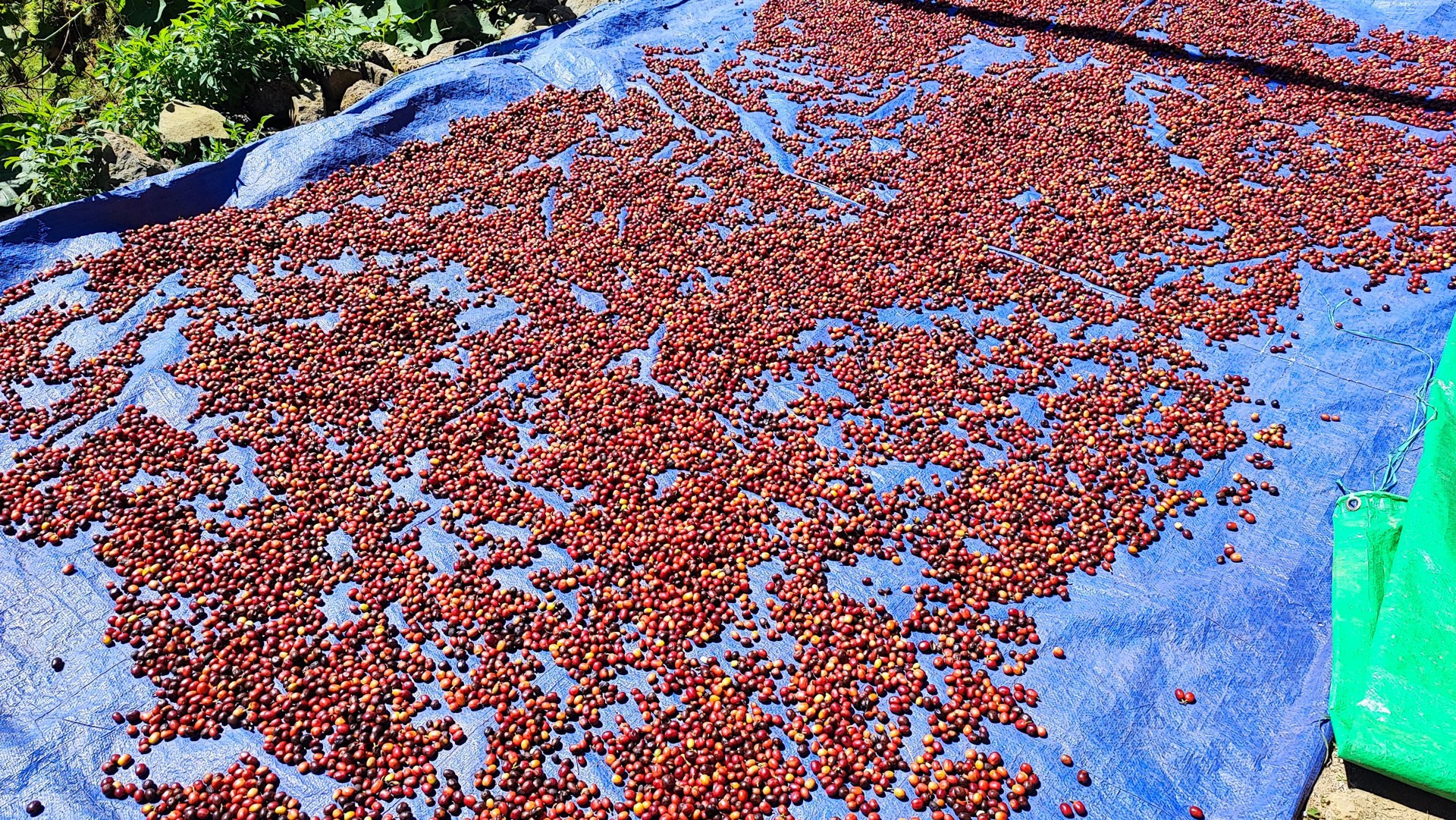
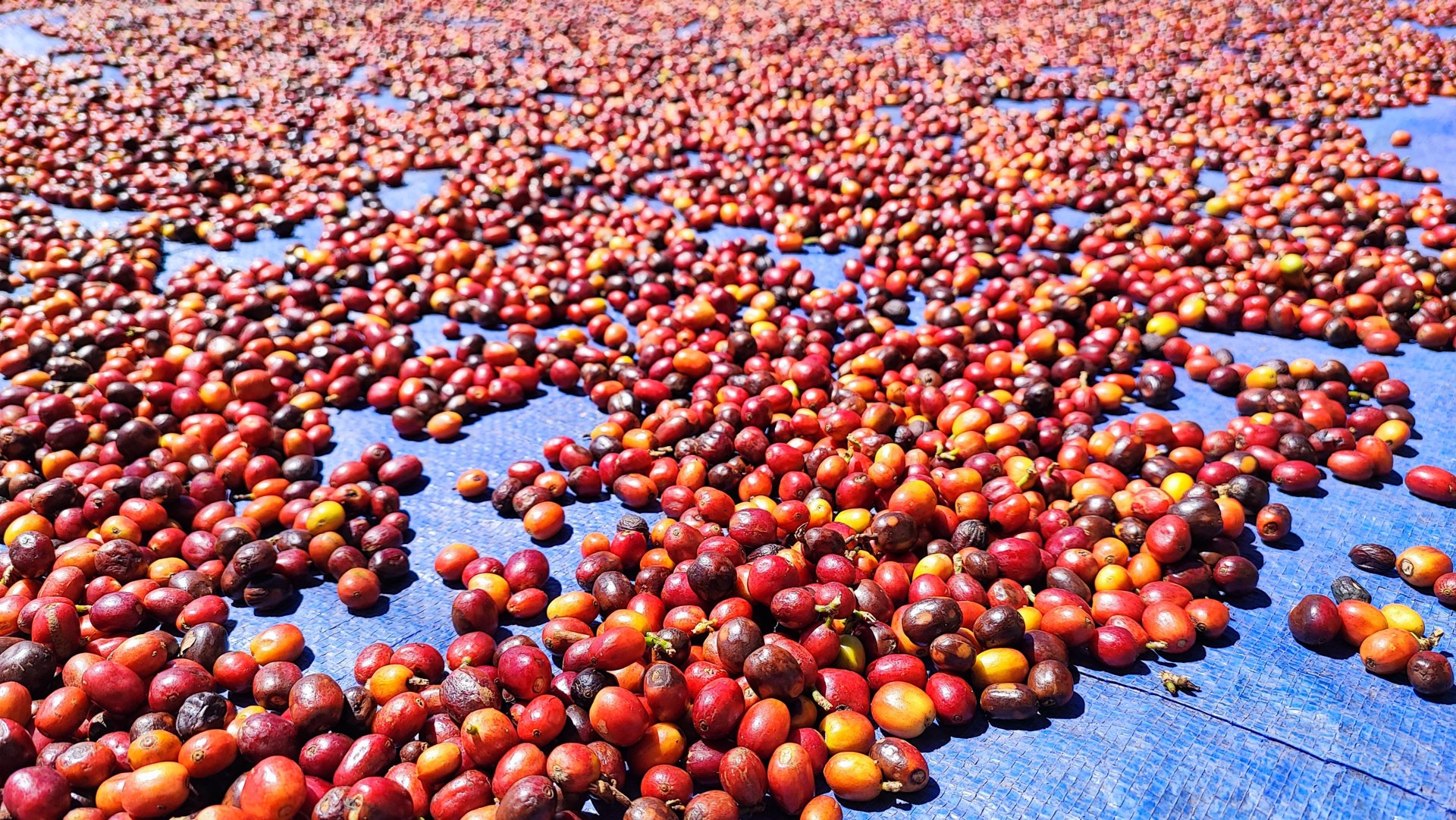
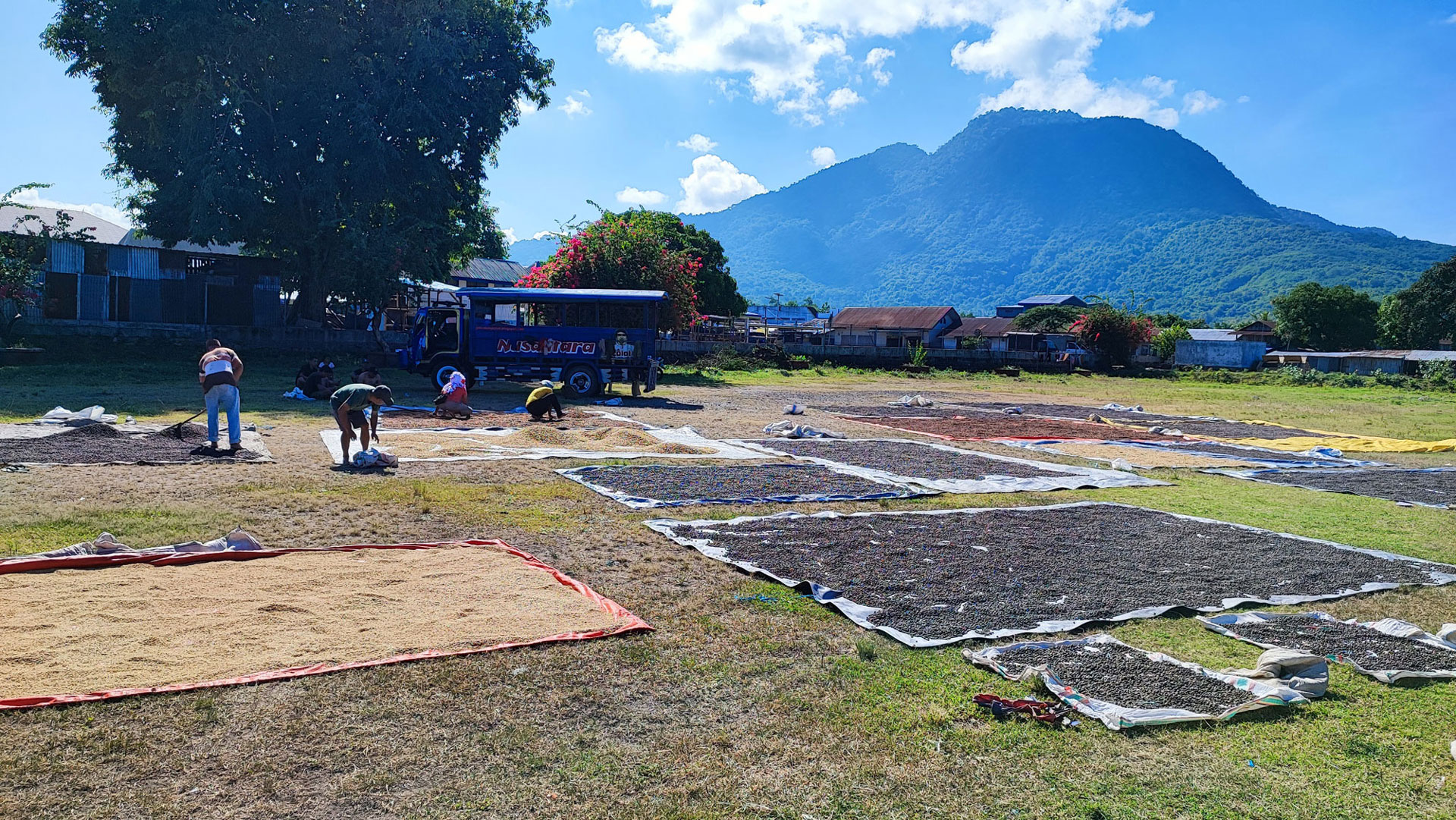
The red, intact cherries, which still have their flesh and pulp intact, are immediately spread out in a thin layer to dry. To prevent contact with the ground, a plastic tarp and often a mat made of natural material are used.
Fermentation takes place directly during the drying process. The fruit is turned regularly to prevent mold from forming. The initial moisture content of 60 to 65% slowly decreases until it reaches 14%. This process depends on the number of hours of sunshine and can take up to 1 to 2 months. At the end of the drying process, the cherry skin is black and crumbly.
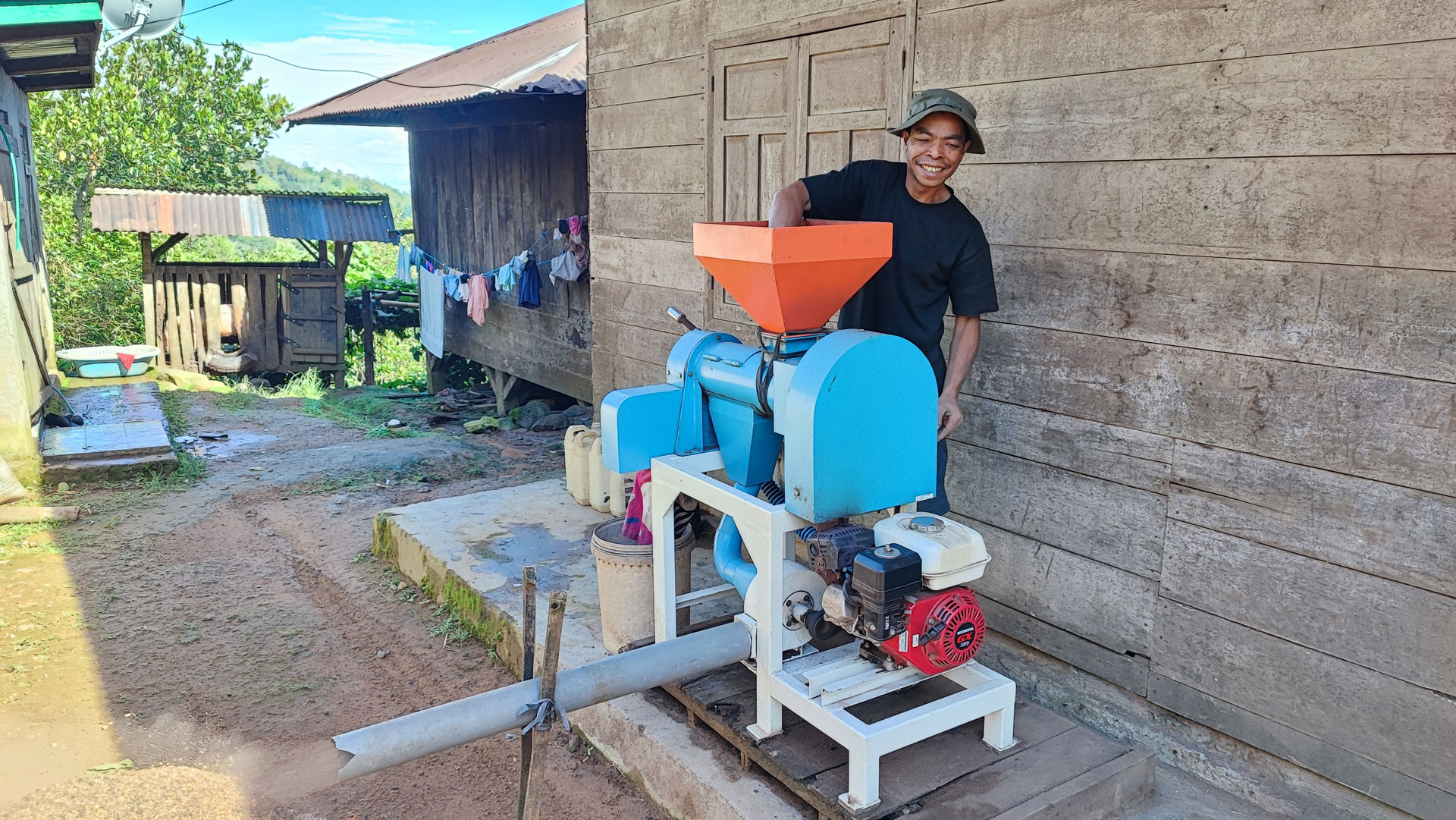
In this form, the farmers store their coffee individually in their homes until a potential buyer (such as us) contacts them. After that, the hulling machine is used to separate the green beans from the pulp and the parchment layer. The beans are then sorted by hand again to ensure that only the best beans remain as specialty coffee.
Due to the manual nature of the process (which leaves room for human error), it is possible that farmers may overlook up to 2 to 3 defective beans per 100 g in the “Specialty” grade.
Finally, the coffee beans are dried to a moisture content of 11.0 to 12.0%. Since the 2024 harvest, farmers have been using moisture meters for this purpose. The beans are then packed in special plastic bags (GrainPro) to protect them from moisture and other external influences.