Processing
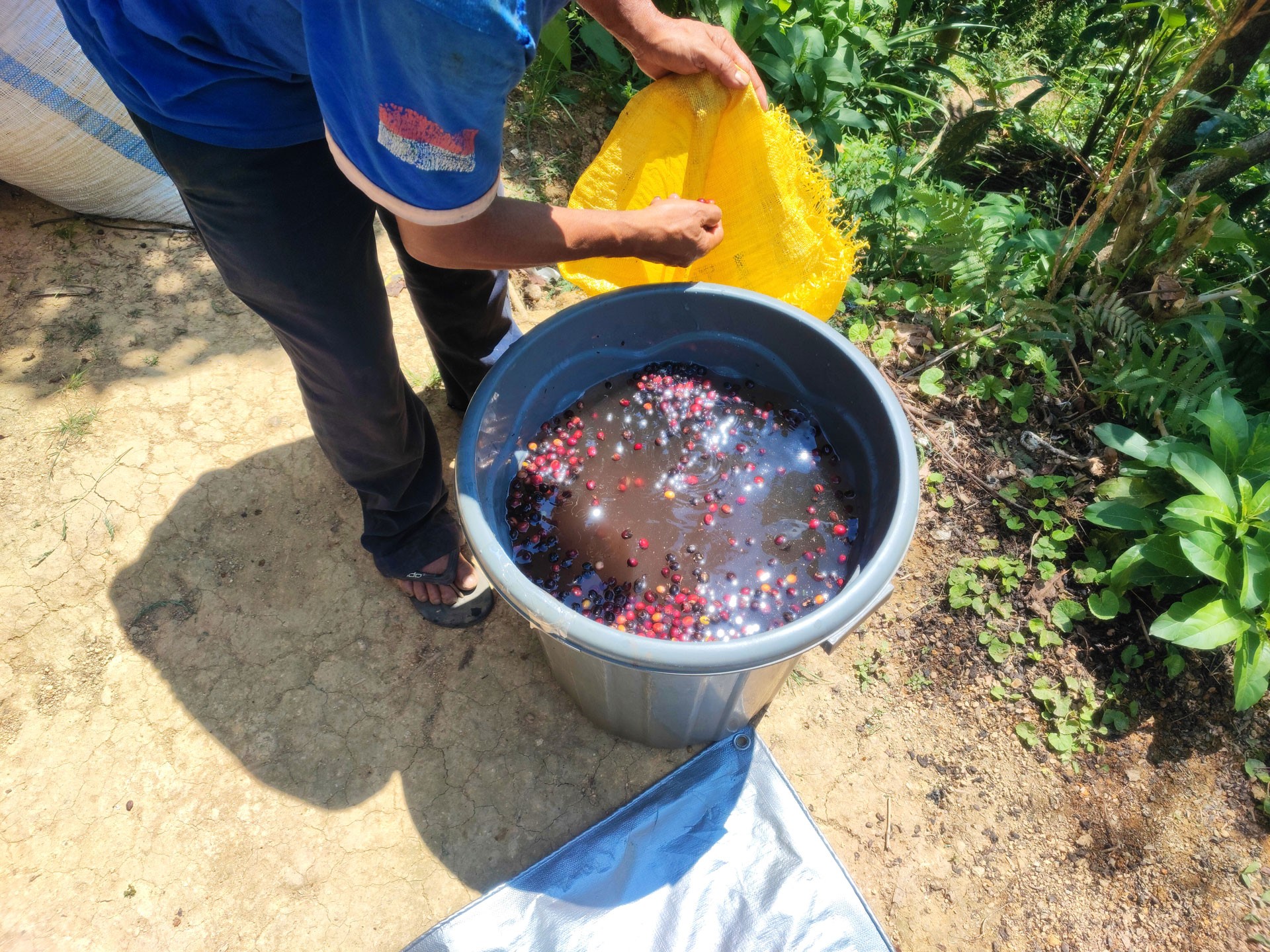
The cherries are then fed into the pulping machine while still wet. Here, the beans are separated from the pulp, and the resulting mixture is packed into a rice sack (approx. 60 kg). The beans are then left to ferment overnight in this open sack. This processing step is important so that the fruit pulp can separate from the beans, as this has a significant impact on the sweetness of the flavor after roasting.
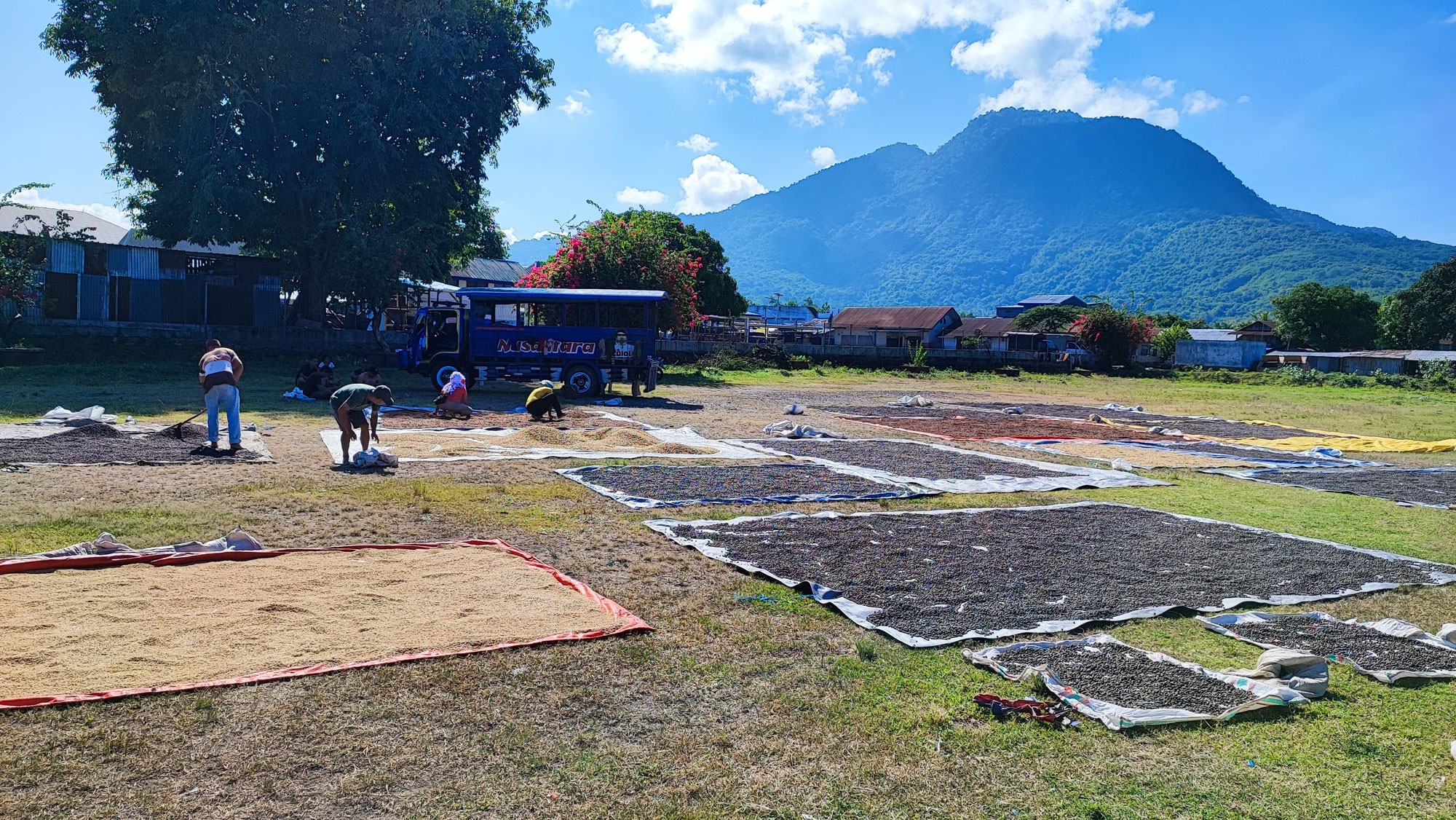
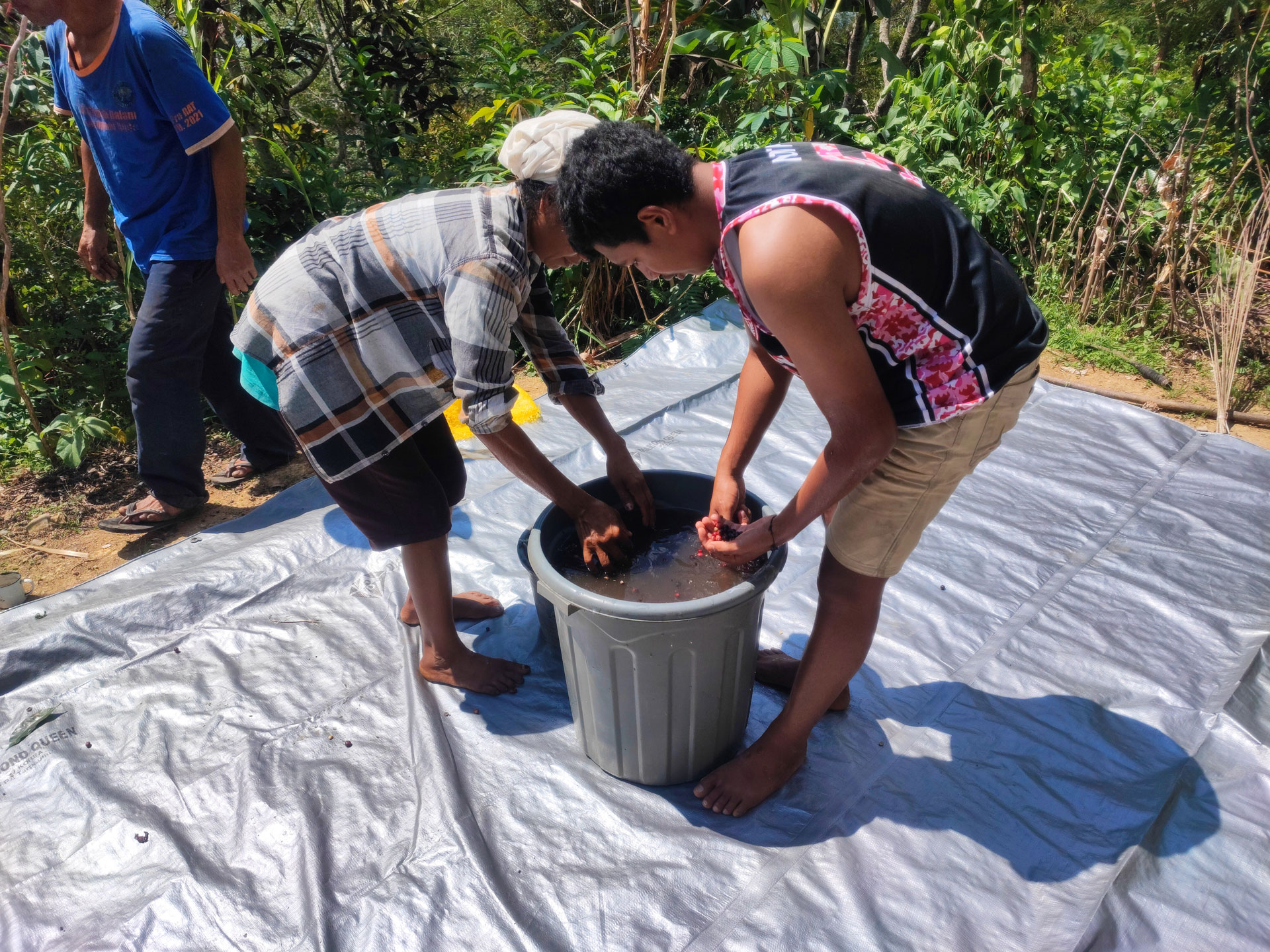
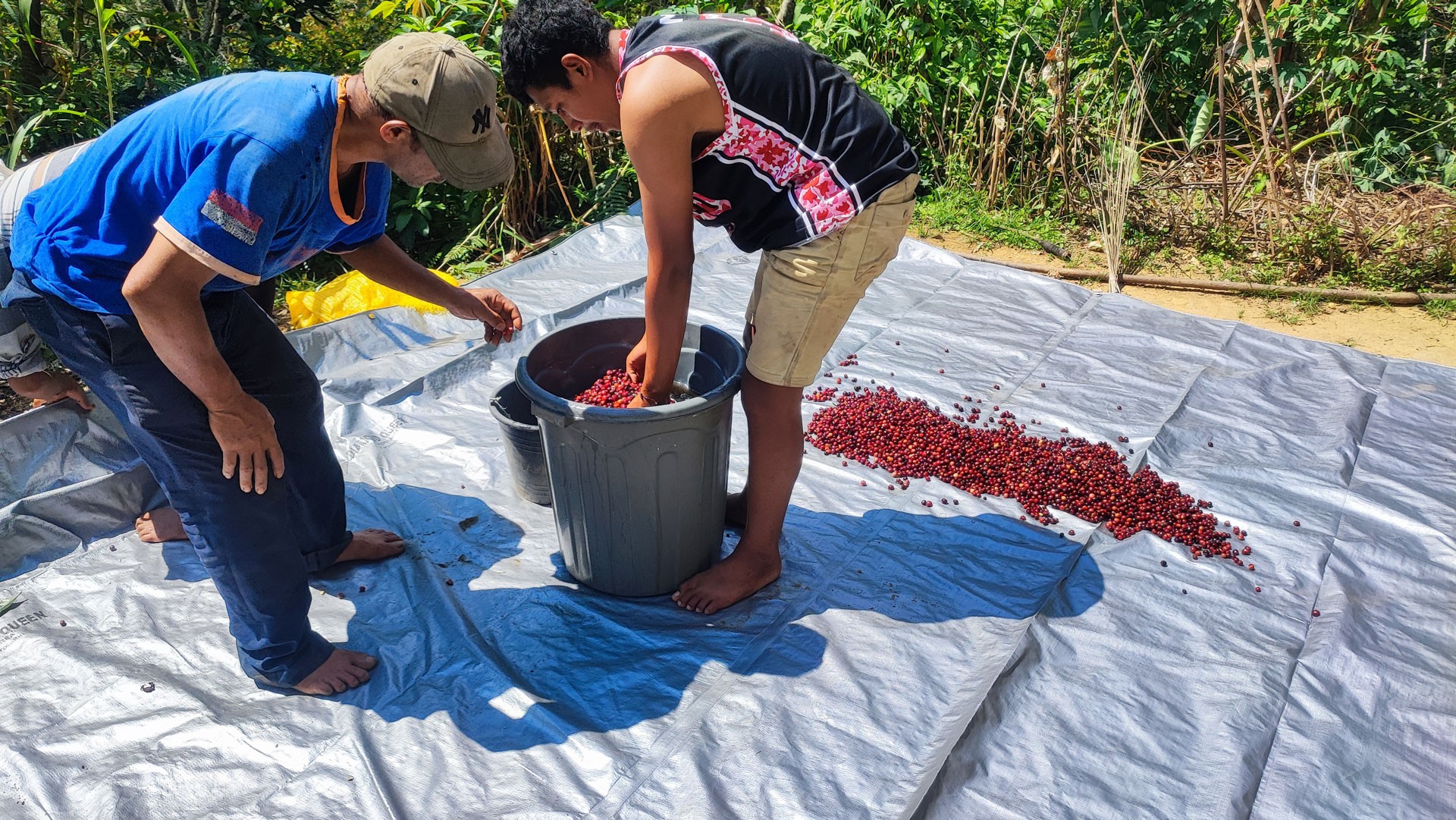
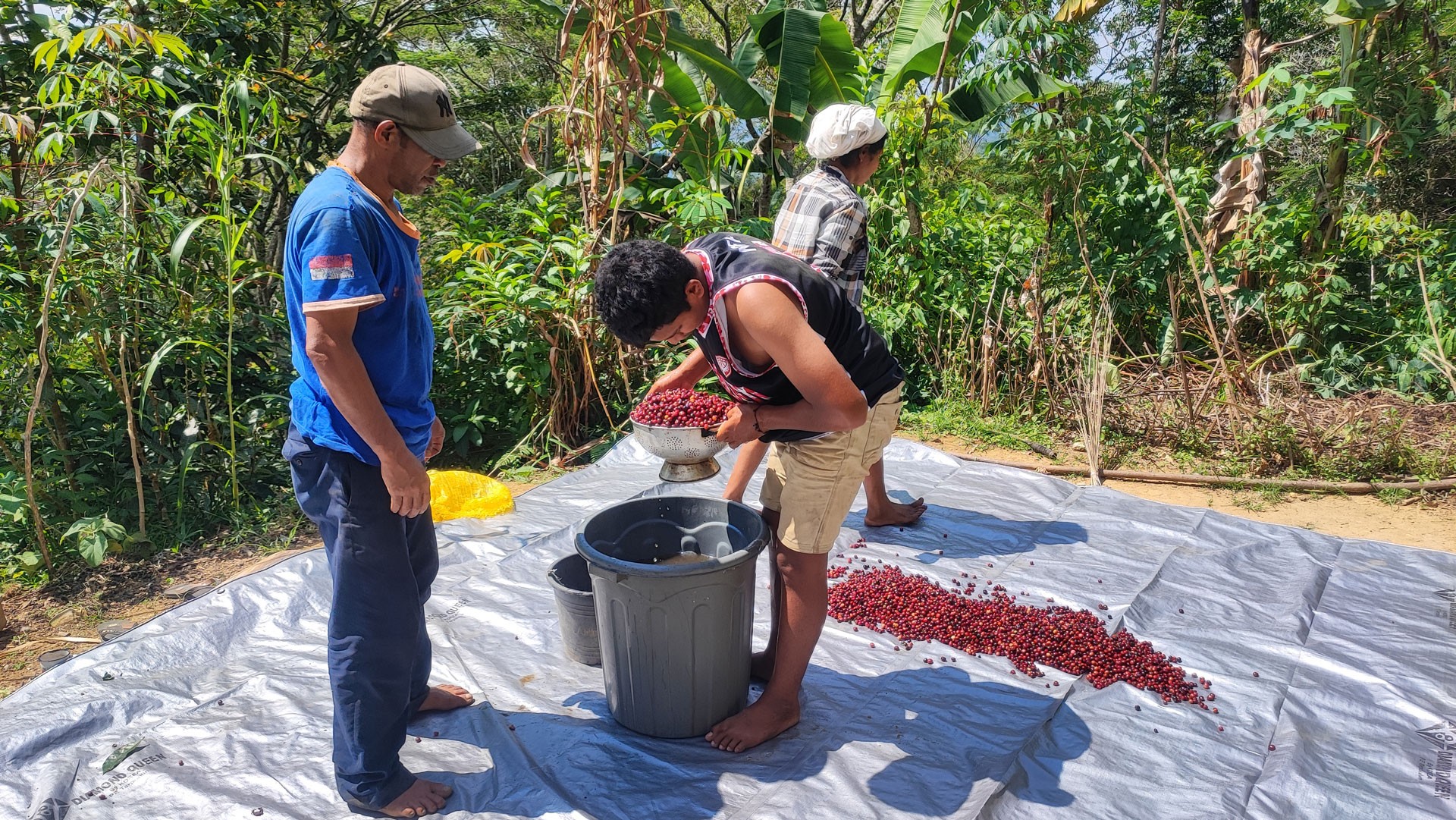
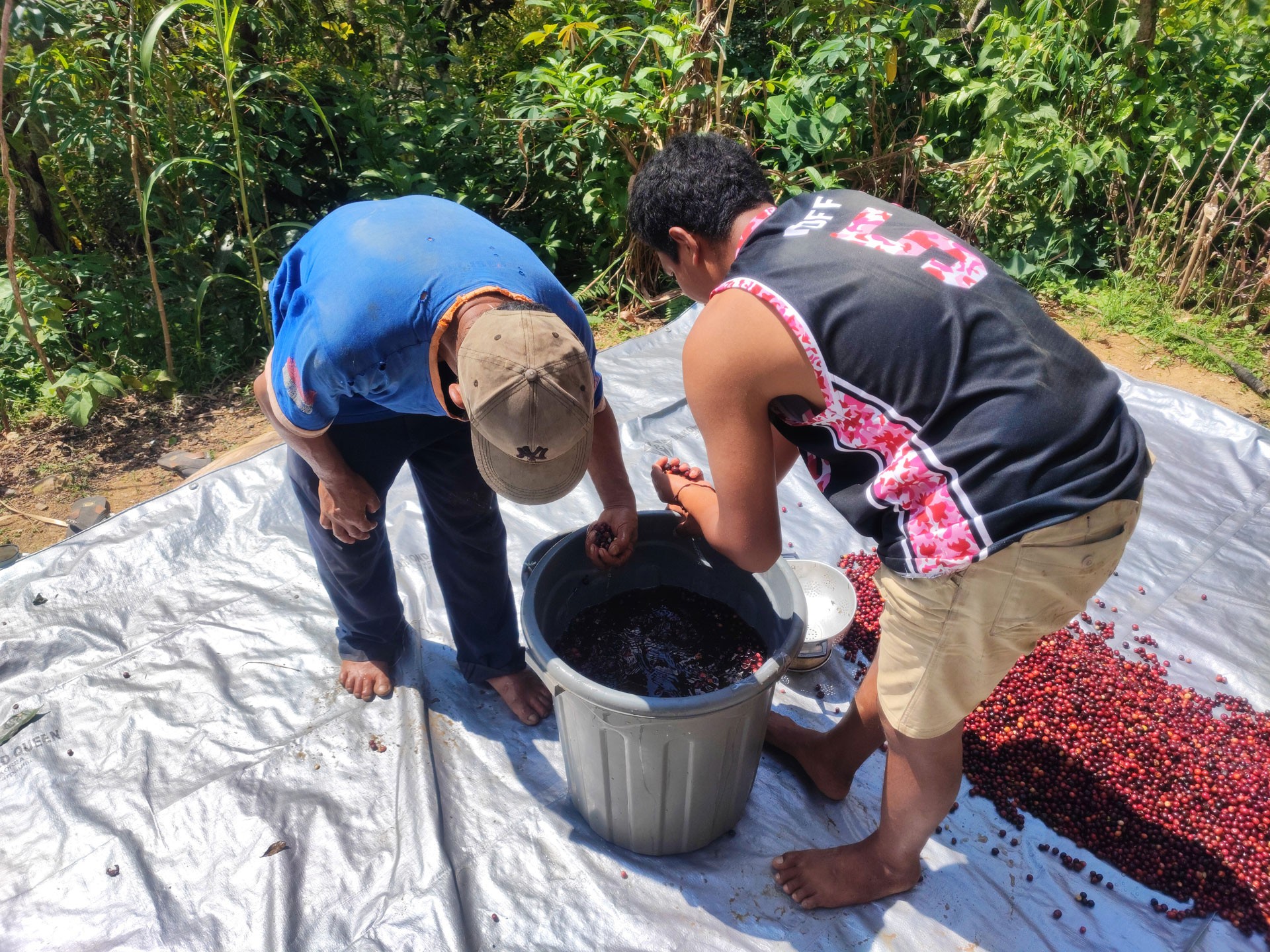
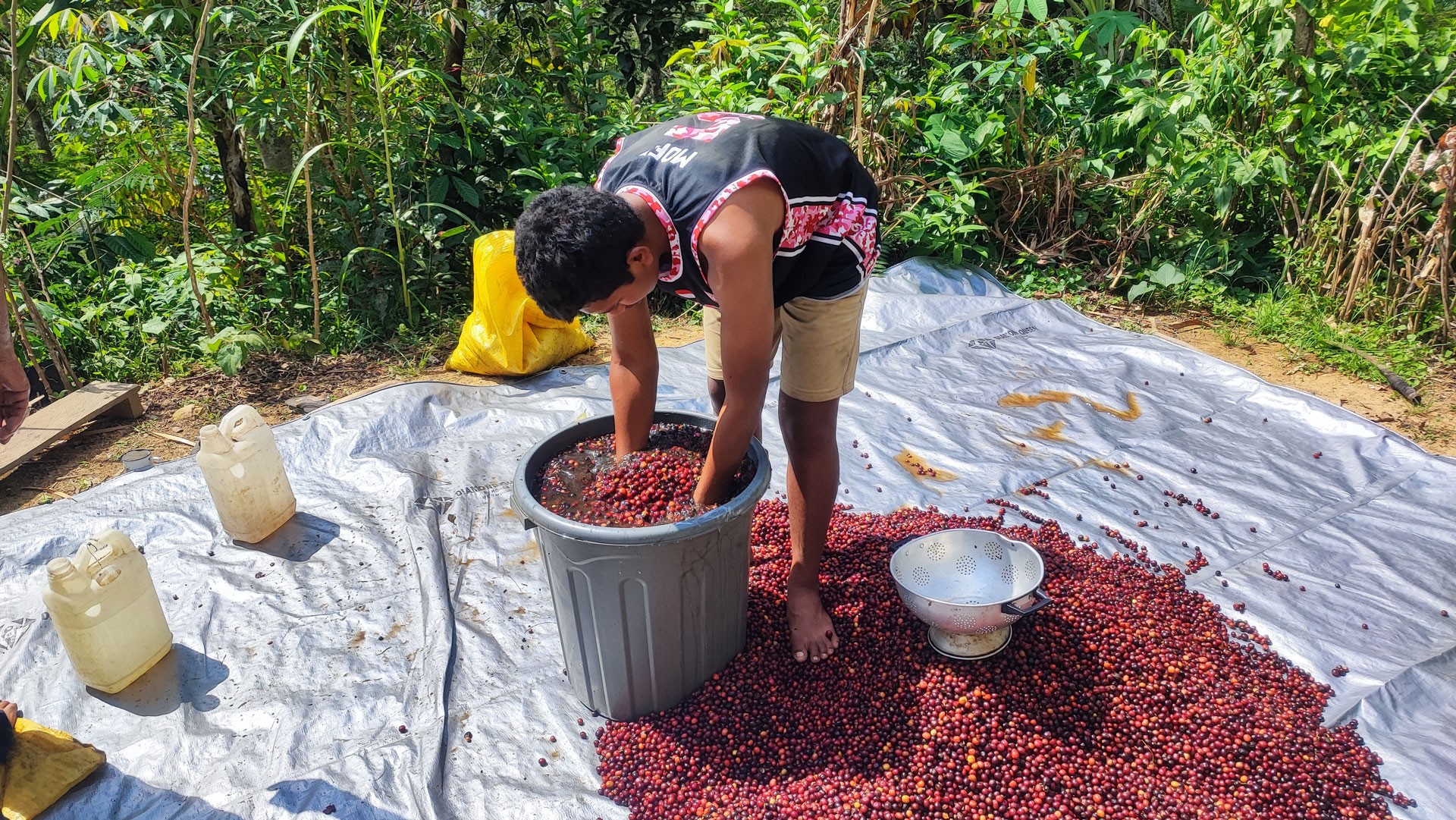
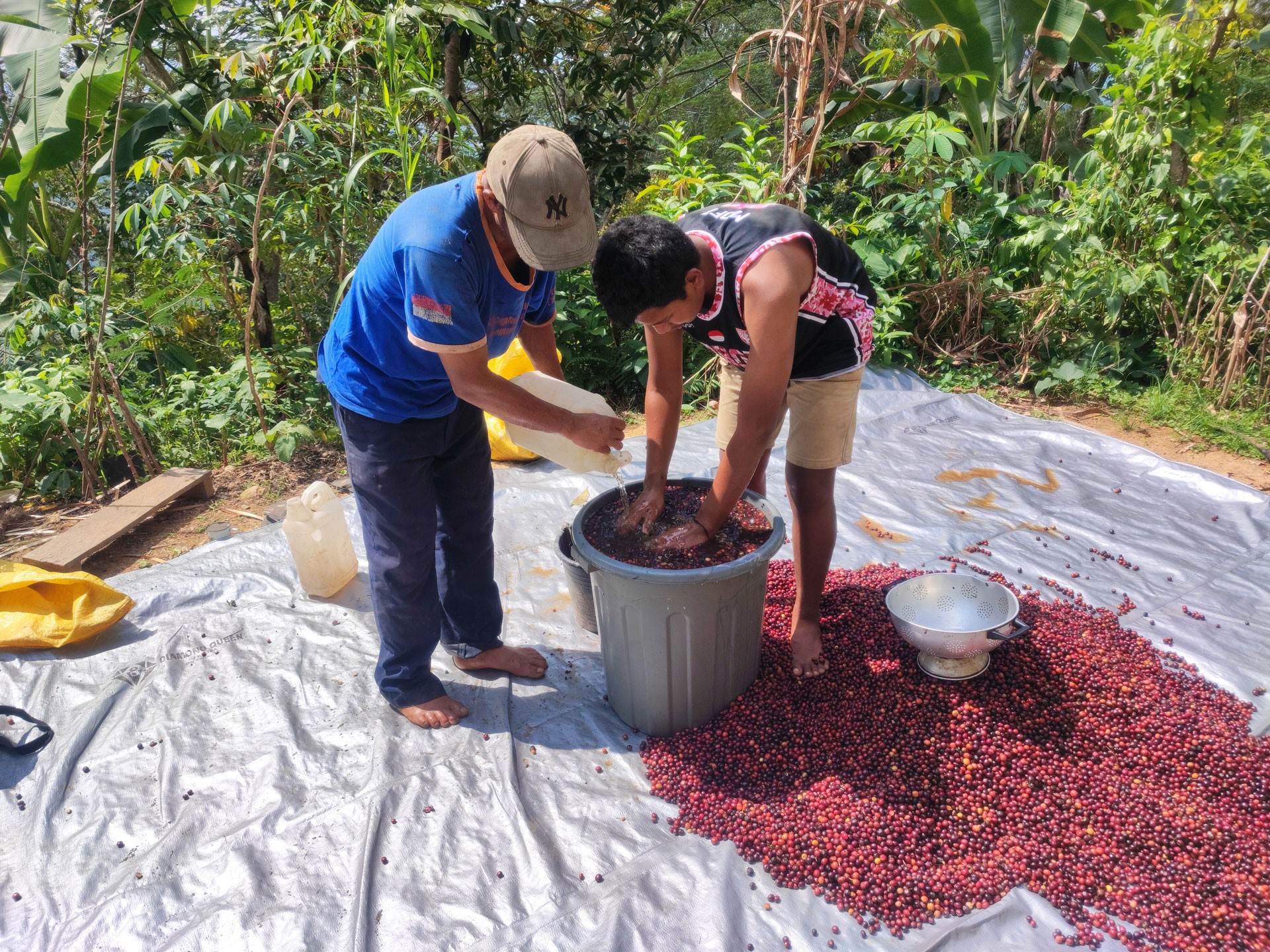
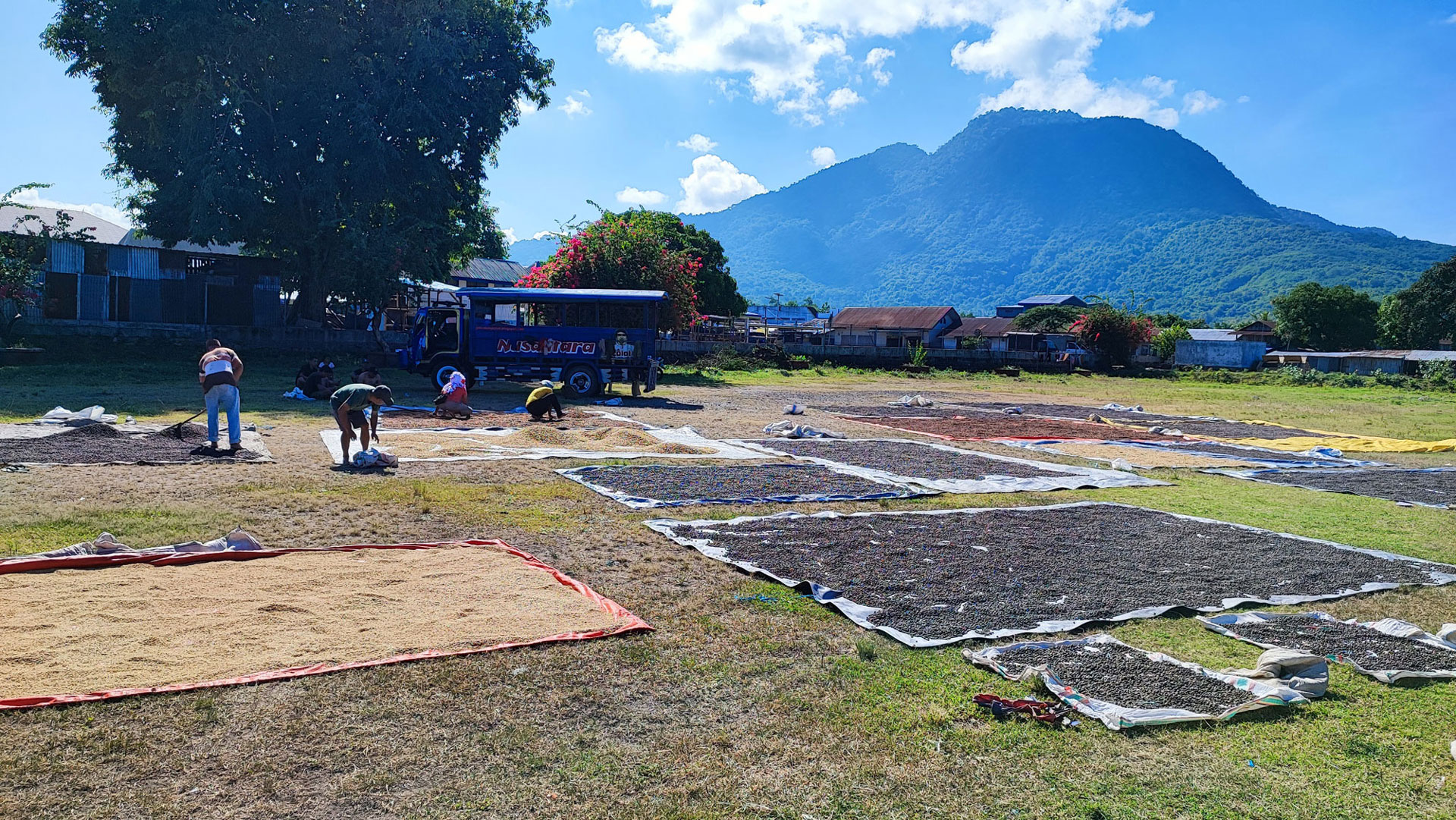
After fermentation, the beans are thoroughly washed and dried for at least one day, or until a moisture content of 40% is reached. To prevent contact with the ground, a plastic tarp and often a mat made of natural material are used. In this wet state, the coffee beans are then processed directly in a wet hulling machine to separate the green beans from the parchment layer.
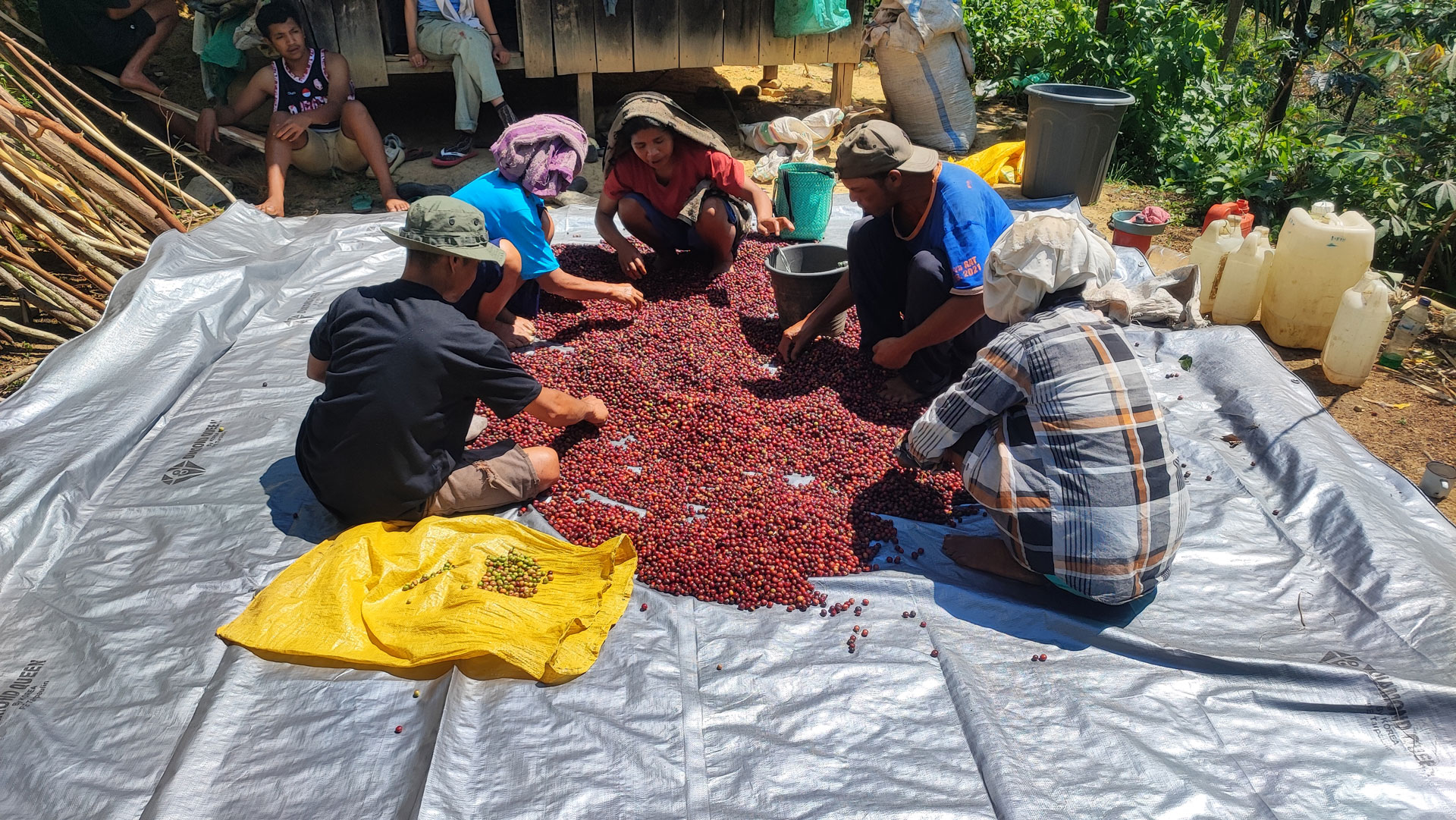
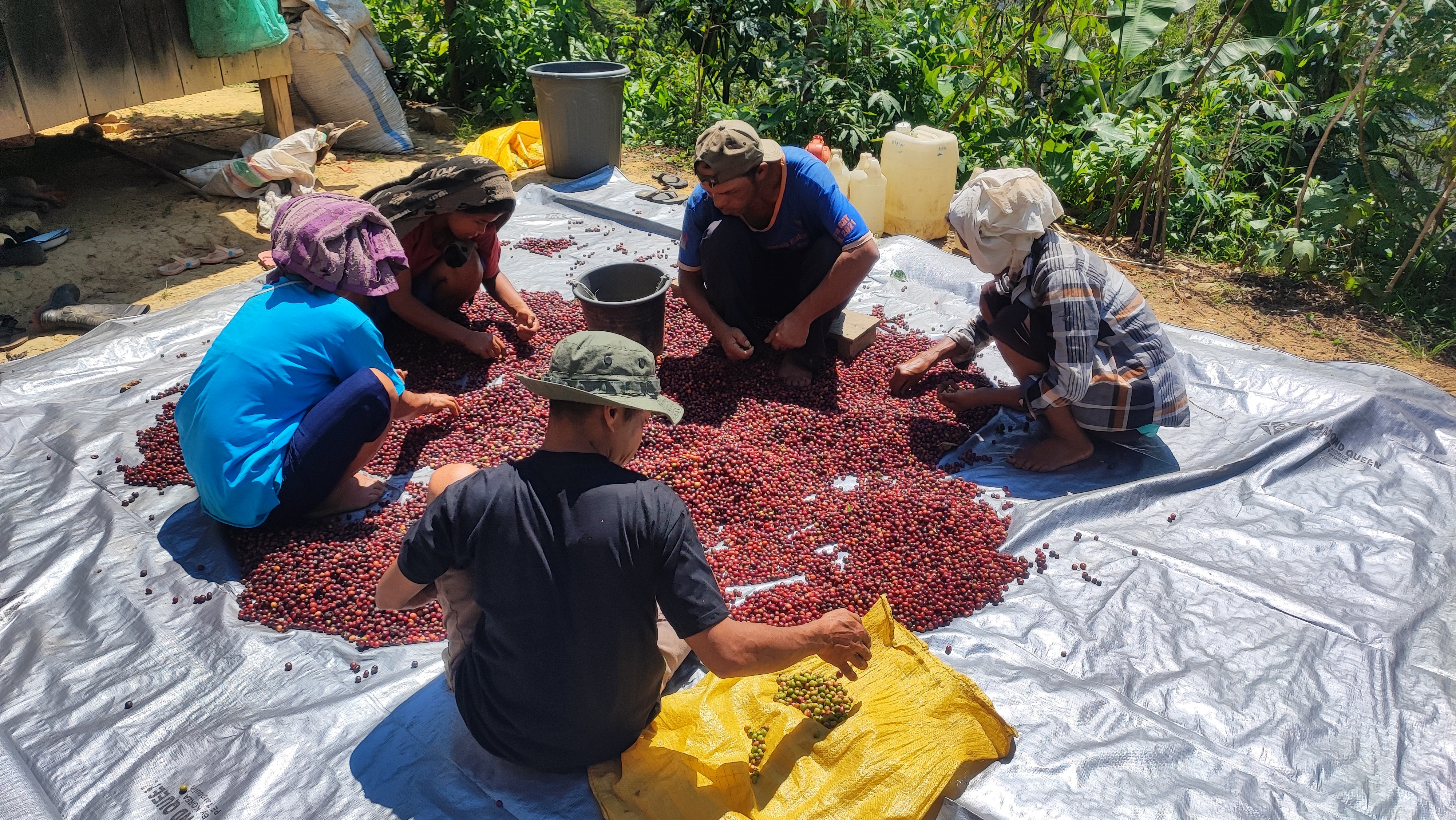
They are then sorted by hand again to ensure that only the best beans remain as specialty coffee.
Due to the manual nature of the process (which leaves room for human error), it is possible that farmers may overlook up to 2 to 3 defective beans per 100 g in the “Specialty” grade.
Finally, the coffee beans are dried to a moisture content of 11.0 to 12.0%. Since the 2024 harvest, the farmers have been using moisture meters for this purpose. Further sorting takes place at this stage as well. The beans are then packed in special plastic bags (GrainPro) to protect them from moisture and other external influences.
In this process, the green coffee beans are greener in color than those processed using the fully washed method. Since our coffee farmers currently (as of April 2026) do not have a hulling machine for wet processing, this processing method is not used.